
Family & Tradition
Suparsa’s Homestay exists because of the family compound in which it is located. This is not a recreated setting or a cultural backdrop, but a place where several generations of the same family live, work, and continue long-established traditions.
Guests are welcomed into a living environment — one shaped by responsibility, routine, and respect — rather than into a space designed to perform culture.
The Family at the Heart of the Compound
At the heart of the compound live Suparsa and Karsi, the grandparents of the family. Suparsa, a retired gymnastics teacher, continues to care for the compound and its gardens, maintaining the space on a daily basis.
Their eldest son lives in the central building with his wife Nanik. Nanik runs the street-side shop and spa boutique, offering textiles, garments, and treatments, independently from the guest areas.
Tris, another son of the family, lives in the compound with his wife Wita and their children. Tris runs Tropsa, the scooter rental at the entrance on Sri Wedari Street, and also serves as the head of the local banjar — a respected public role within the neighborhood.
Several children grow up within the compound. They are part of daily life, especially in the mornings and afternoons, while guest areas and private family spaces remain clearly separated.
The Family Temple
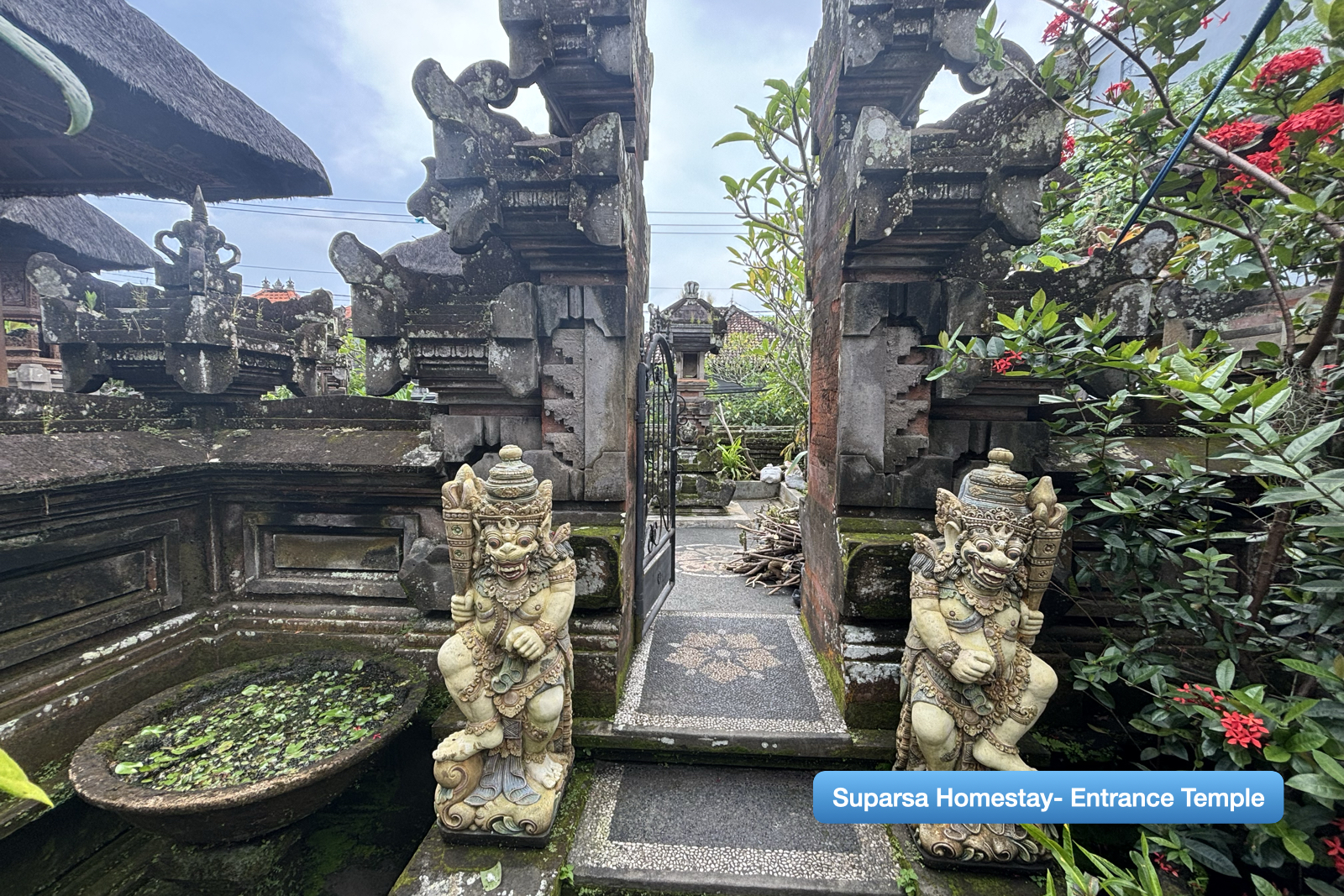
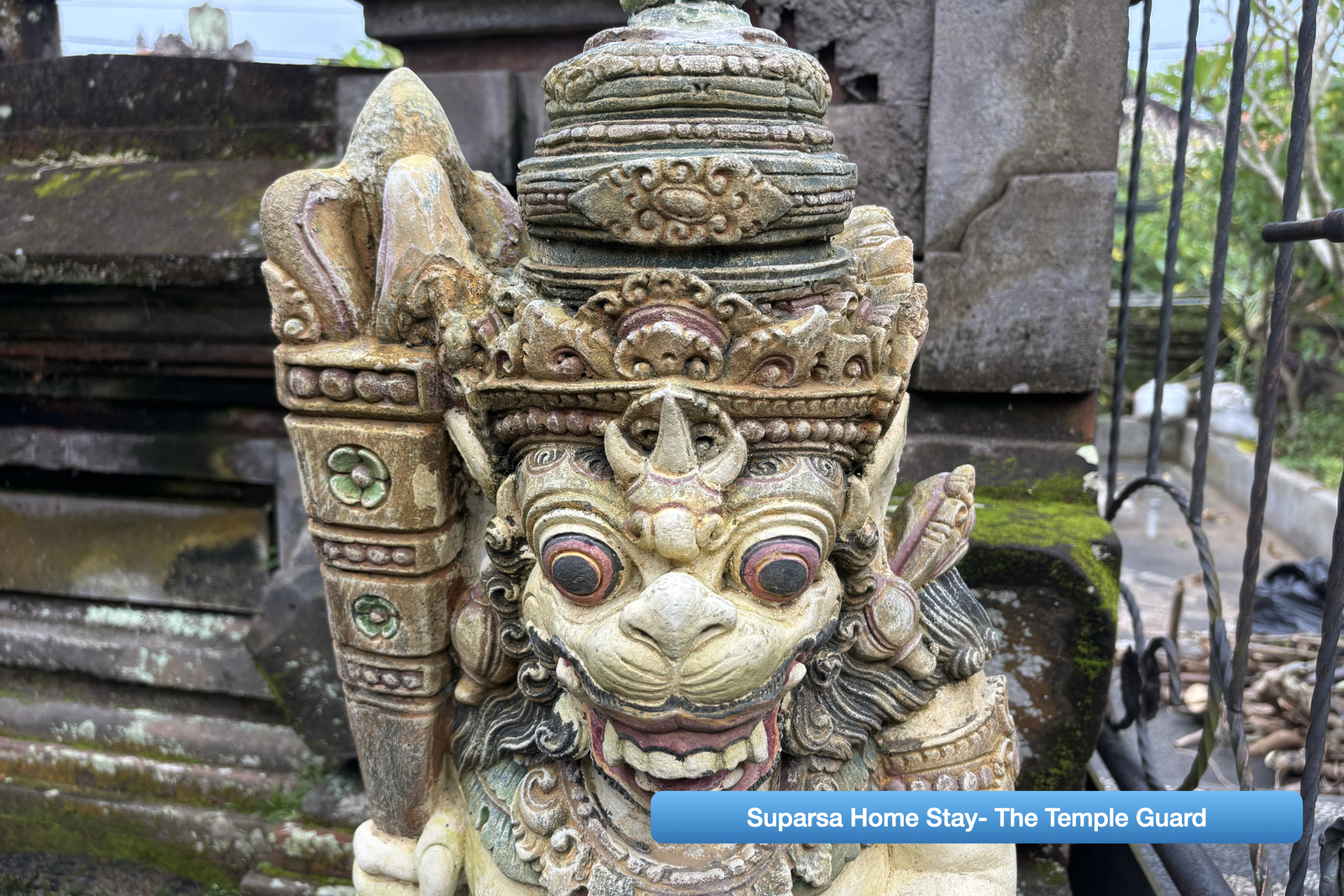
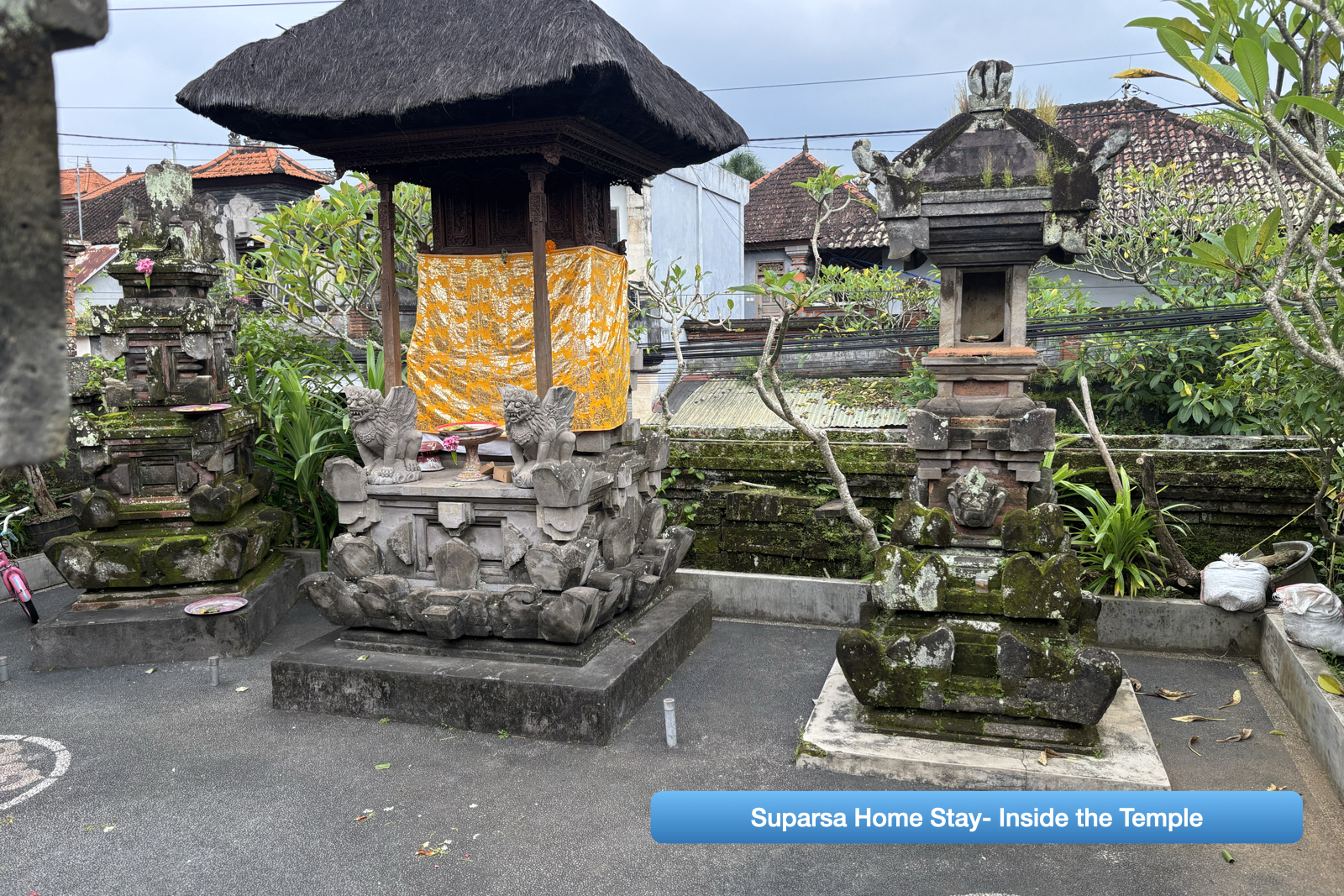
The family temple inside the compound is private and actively used. It is not a place designed for visits or observation, but one that forms the spiritual centre of family life.
Guests may see the entrance and occasionally take a brief look inside, but the family prefers to keep the temple itself private. Putra is always happy to explain the meaning, structure, and rituals connected to the temple, and why certain spaces are approached with restraint.
Daily Rhythm & Offerings
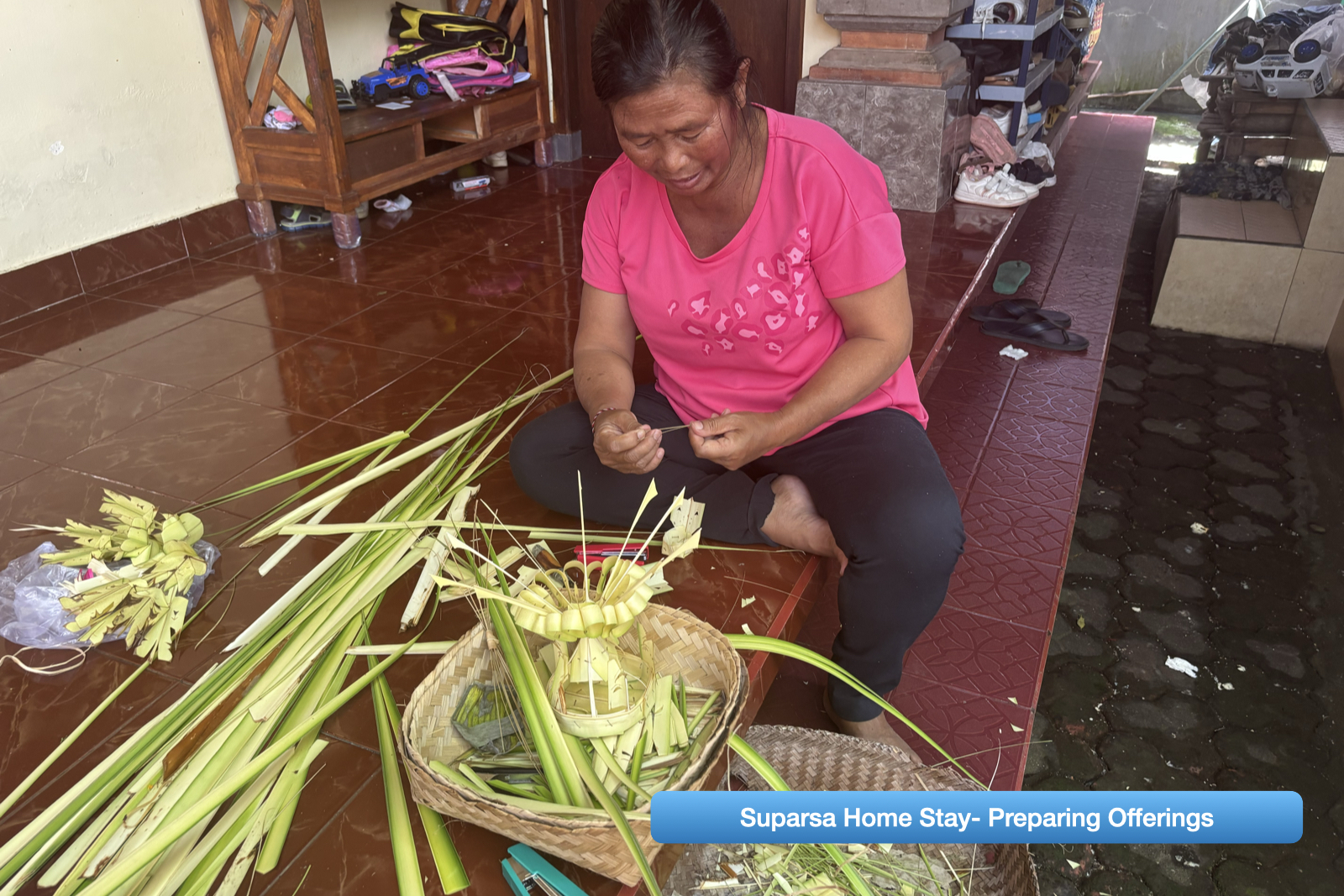
Every morning begins with offerings. The women of the family prepare and place offerings throughout the compound — at entrances, shrines, and shared spaces.
This work is not scheduled around guests and is not performed for visitors. It continues regardless of who is staying at the homestay and forms the quiet rhythm of each day.
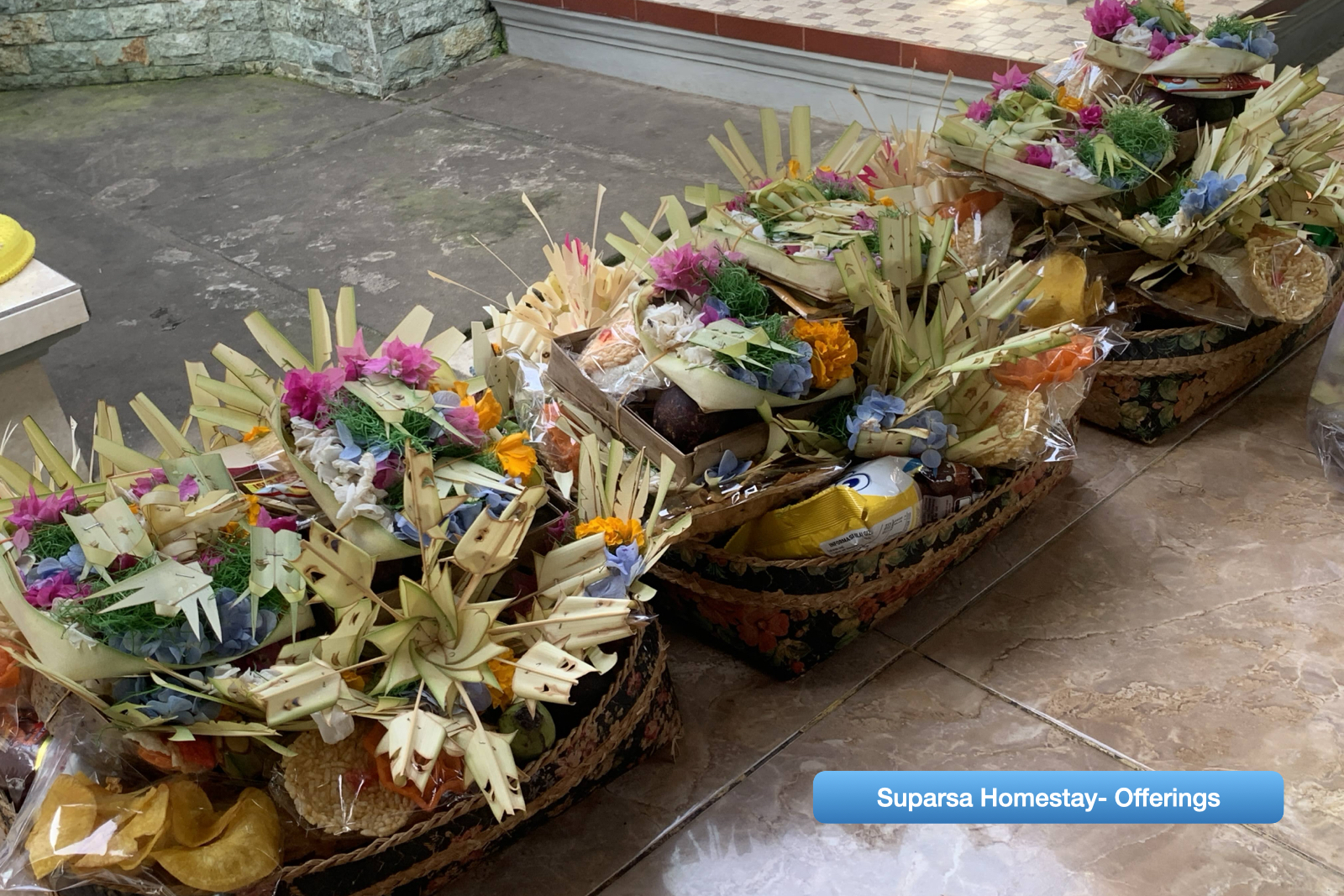
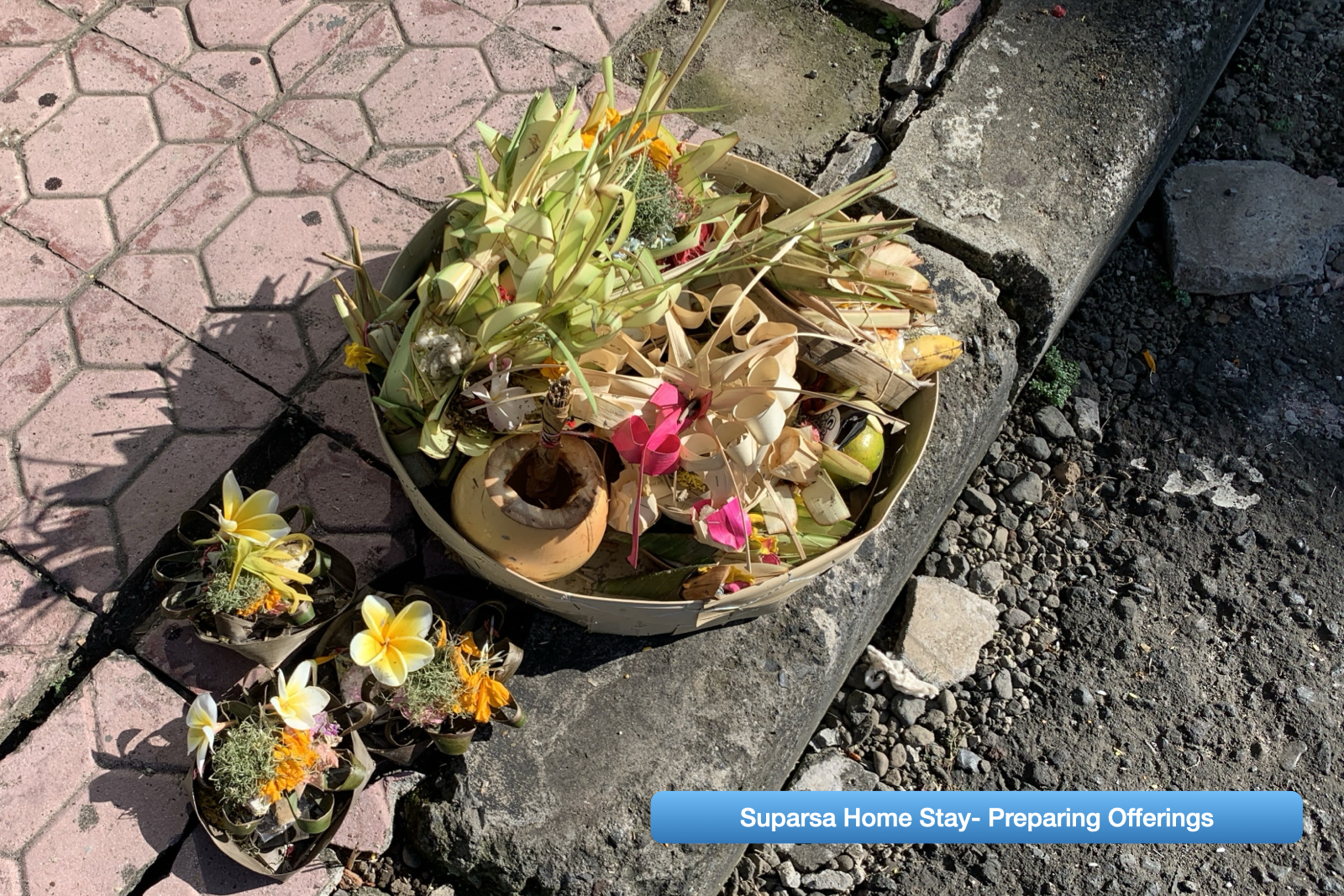
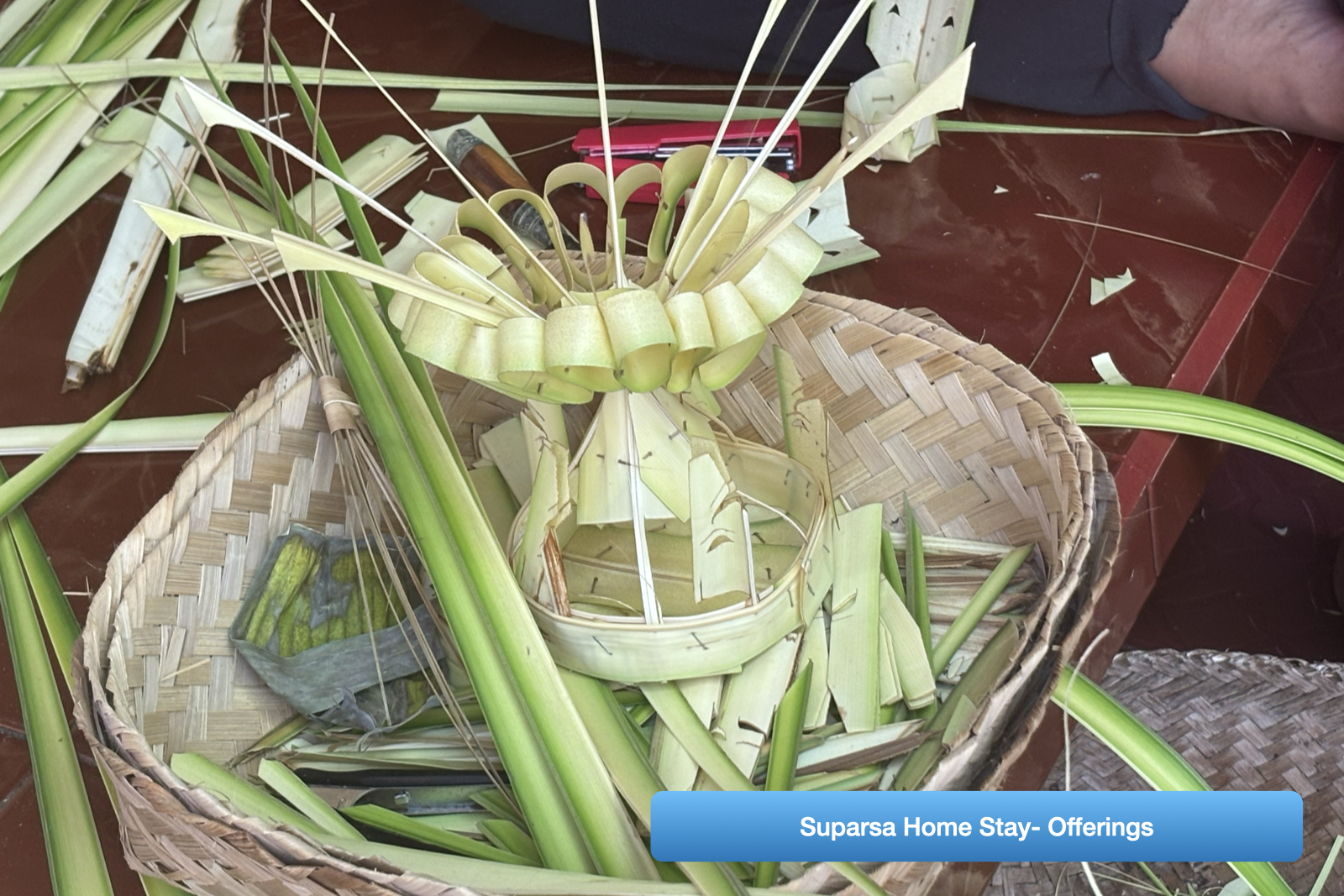
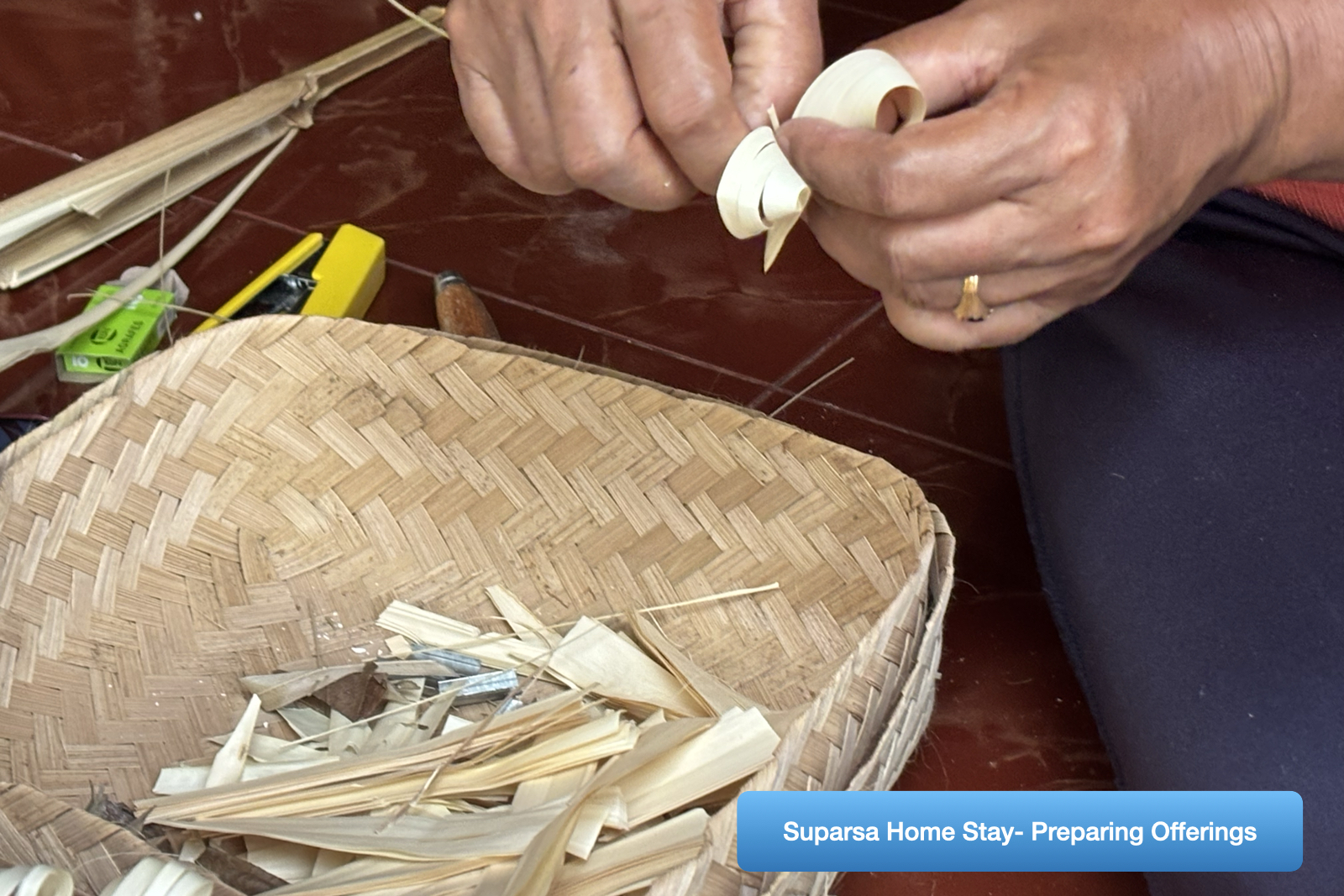
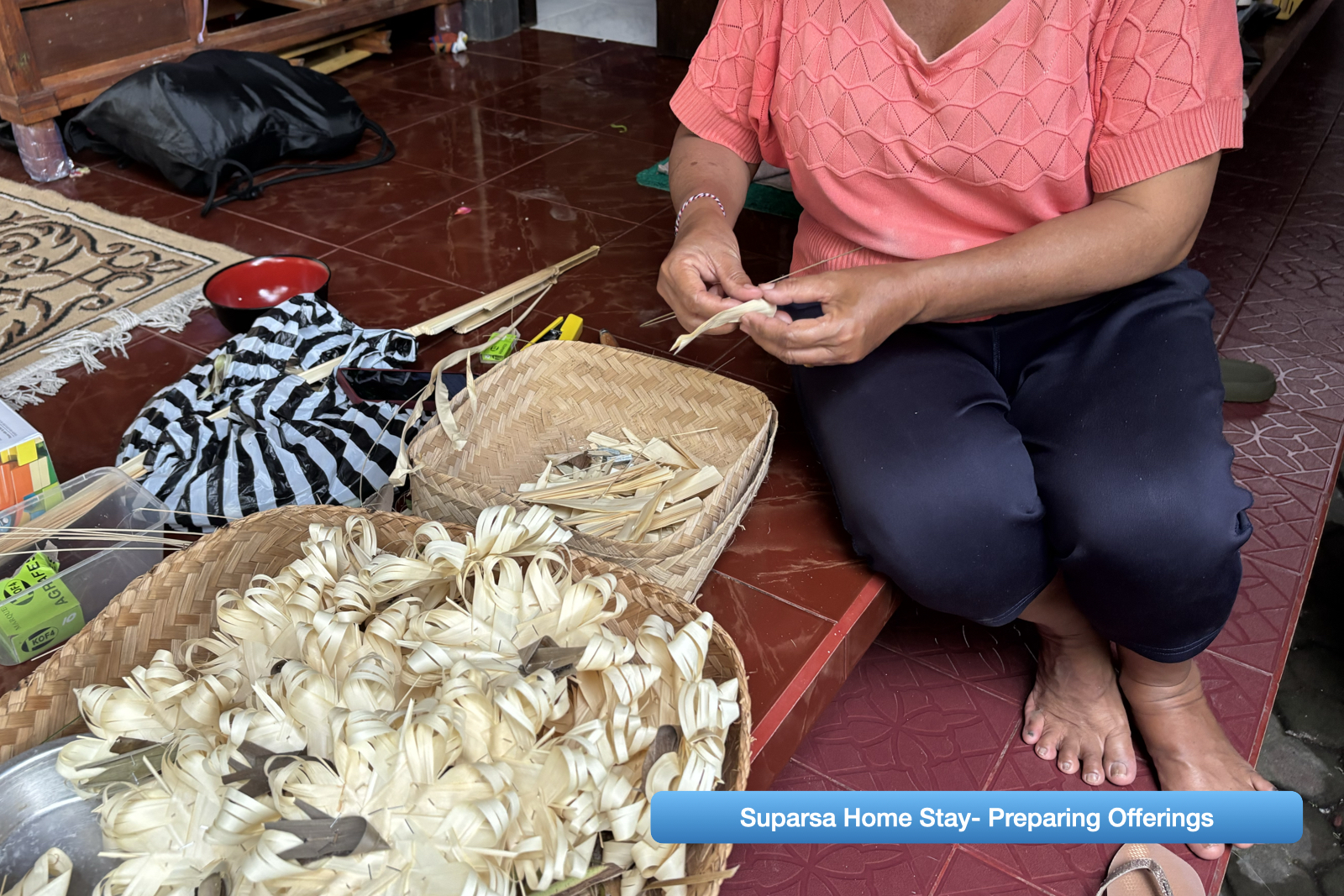
When time allows, offerings are prepared together, dried, assembled, and arranged for future ceremonies. This work often happens in shared spaces, woven naturally into daily life.
Guided by Putra
The homestay is managed by Putra, who grew up in this compound and knows its rhythm intimately. He coordinates guest stays, assists with practical matters, and offers guidance for exploring the region.
Putra works together with a small staff team of four to five people, all familiar with the compound and comfortable communicating in English. Their role is to support guests while ensuring that the family’s daily rhythm remains intact.
A Place Shaped by People
Staying at Suparsa’s Homestay means staying close to a living family place. It is shaped by people who live here, work here, and carry responsibility within their community.
This human presence — quiet, continuous, and unforced — is central to the character of the homestay.